Even a small gap around a garage door can point to issues with the door, hardware, seals or surrounding structure. For property owners dealing with garage doors in Sydney, recognising these warning signs early can help prevent moisture intrusion, pest access, energy loss and unnecessary wear on the door system.
Advanced Garage Door Systems understands that what appears to be a minor gap often has a practical cause, from worn weather seals to track alignment problems or changes in the garage floor. Identifying the location of the gap is the first step in deciding whether a simple seal replacement is enough or whether professional adjustment or repair is required.
This article explains the most common reasons gaps develop at the bottom, sides or top of a garage door, what those openings may indicate and when they should be fixed to restore safe operation, security and a proper seal.
Gaps around a garage door may look like a minor annoyance, but they often indicate that something is out of alignment, worn or no longer sealing correctly. Left unaddressed, these openings can allow water, dust, pests and draughts into the garage while placing extra strain on the door system.
Addressing gaps early helps protect the home and prevents small issues from becoming larger repair problems. Even a narrow strip of daylight under or beside the door can be a sign that the seal, floor, track or door balance needs attention.
Any visible gap allows outside air to move into the garage. During hot or cold weather, this can make the garage and adjoining rooms harder to keep comfortable, particularly when the garage is attached to the home or has an insulated door. Heating and cooling systems may need to work harder when air is constantly entering through unsealed gaps.
Moisture is another concern. Wind-driven rain can enter through gaps and leave water pooling near the bottom of the door or across the garage floor. Repeated exposure may contribute to rust on metal components, including tracks, springs, brackets and fixings. In humid conditions, moisture can also affect stored items, plasterboard, timber framing and flooring materials.
Small pests do not need a large opening to enter a garage. A gap of around 10–15 mm may be enough for insects, rodents or other small pests to get inside and begin nesting in stored boxes, insulation or vehicles.
Gaps along the sides or top of the garage door can also allow dust, leaves and debris to blow inside. Over time, debris around the tracks, rollers and seals can affect smooth door movement and accelerate wear on the rubber or vinyl components.
A garage door that closes tightly helps maintain home security. Gaps, especially around the bottom corners or sides, can create weak points that make the door easier to interfere with. An older door that no longer sits flat against the floor may also be less secure than one that closes evenly.
Gaps can also point to mechanical issues. A door that hangs unevenly or leaves one corner open may have a spring, cable, roller or track problem. Continuing to operate the door in this condition can increase the risk of further damage or unsafe movement.
Garage door gaps usually appear in a few predictable locations. Checking where the gap is visible can help narrow down the likely cause and determine whether the issue is related to the seal, floor, tracks, opener or door balance.
The most common areas to inspect are the bottom edge, side edges and top of the door.
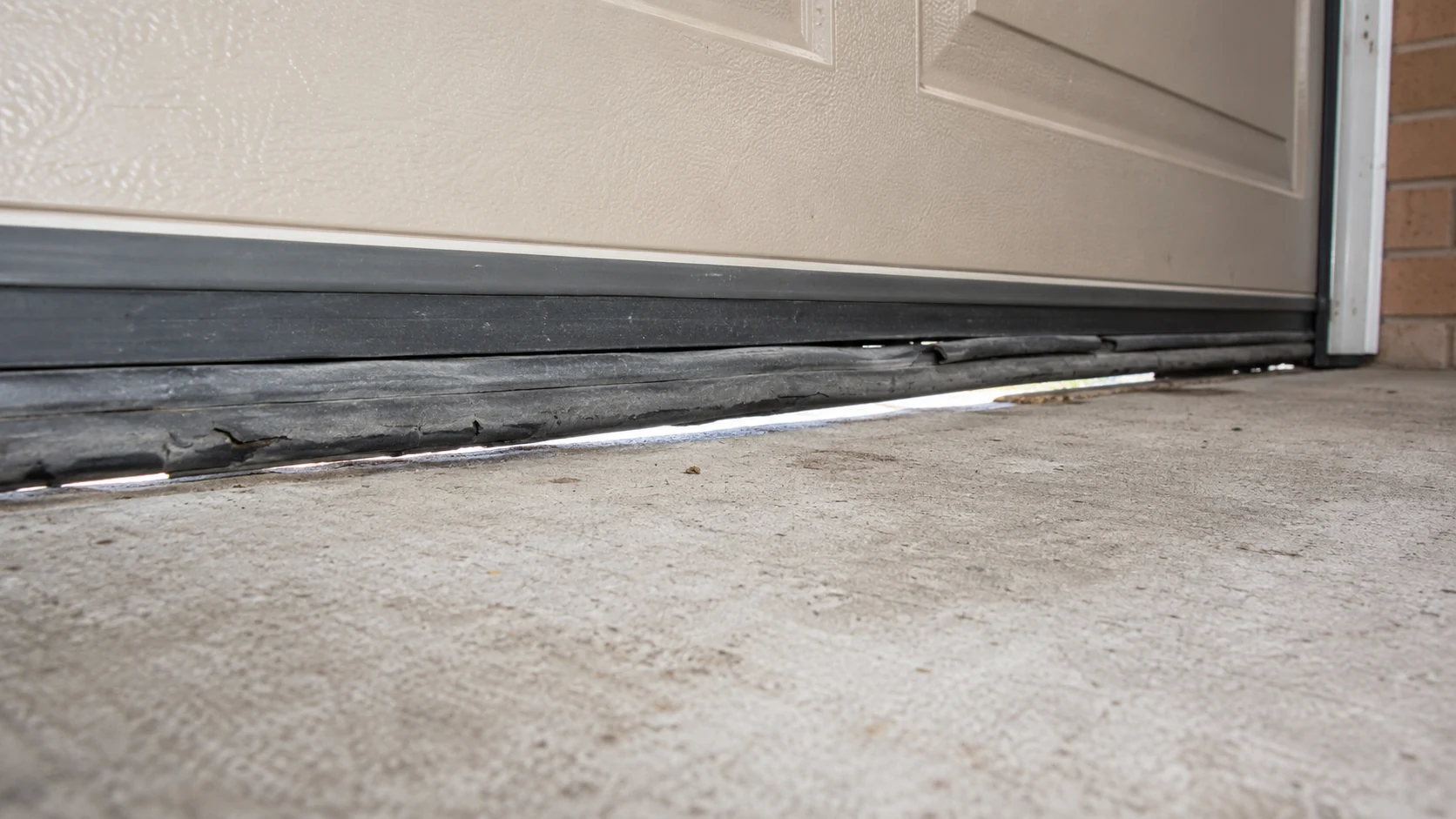
The bottom of the garage door is the most common place for gaps to appear. A small, even line of daylight may indicate a worn bottom seal or minor floor irregularity. Larger or uneven gaps usually suggest an alignment, floor level or spring balance issue.
Common causes of bottom gaps include:
When checking the bottom of the door, look along the full width while the door is closed. If one corner sits higher than the other, the issue is more likely to involve alignment, spring balance or track positioning rather than only a worn seal.
Side gaps appear where the edges of the door meet the vertical perimeter seals on the frame. These gaps are often easier to see from inside the garage when the lights are off and daylight is visible around the door.
Side gaps commonly result from:
A consistent side gap may be caused by worn perimeter seals. An uneven side gap that is wider at the top or bottom often indicates track movement, structural movement or door misalignment.
Top gaps appear where the highest section of the door meets the header seal. These are easy to overlook because they sit above eye level, but they can still allow draughts, dust and rain to enter.
Common causes of top gaps include:
From inside the garage, look for daylight along the top edge when the door is closed. If the gap changes when gentle downward pressure is applied, the issue may be related to opener settings or door balance rather than the seal alone.
Garage door gaps usually have a clear cause. Some are simple maintenance issues, while others indicate a mechanical or structural problem that needs professional attention.
Understanding the most common causes helps determine whether a new seal is likely to solve the problem or whether the door needs adjustment or repair.
Concrete garage floors can shift over time due to soil movement, moisture, age or poor drainage. When the floor is no longer level, the garage door may close correctly in one area but leave a visible gap in another.
The door itself may still be straight, but the floor no longer provides an even surface for the bottom seal to compress against. A larger bottom seal or threshold seal may help with minor floor irregularities. More significant settlement may require a tailored sealing solution or floor repair.
Bottom seals, side seals and top seals are designed to compress and fill small spaces around the door. Over time, rubber and vinyl can harden, crack, flatten, tear or pull away from the frame.
A flattened bottom seal often creates a continuous line of daylight along the floor. Damaged side seals may leave narrow vertical gaps. Top seals can also become brittle or detached, allowing air and water to enter from above.
Replacing worn seals is one of the simplest ways to restore a tighter fit when the door itself is still operating correctly.
If the tracks are not aligned correctly, the door may not sit squarely in the opening. This can cause uneven gaps along the sides, at the top or at one bottom corner.
Track problems may be caused by loose brackets, bent sections, worn rollers or accidental impact. Hinges and rollers that are worn or damaged can also allow sections of the door to sag or move unevenly.
Signs of track or hardware issues may include scraping noises, jerky movement, visible wobbling, rubbing against the tracks or a gap that changes as the door opens and closes.
A garage door may leave a gap if it is not closing fully. This can happen when the opener’s close limit is set too high, causing the motor to stop before the door reaches the floor.
Spring balance can also affect how the door sits when closed. If the spring tension is incorrect, the door may not rest evenly on the floor or may rebound slightly after closing. This can create a persistent bottom gap.
These settings need to be adjusted carefully. Incorrect adjustment can strain the opener, damage the door or create a safety risk.
Not every garage door gap requires major repair. In many cases, the problem is simply a worn or damaged seal that no longer sits tightly against the floor or frame.
A new seal may be enough when the door operates smoothly, sits square in the opening and the gap is small, consistent and clearly linked to damaged rubber or vinyl.
The bottom seal, also known as the astragal, is the flexible strip along the bottom edge of the garage door. Over time, it can flatten, crack or tear, allowing air, water and daylight to pass through.
A new bottom seal may be sufficient if:
If the concrete floor is reasonably level and the door sits straight, a correctly fitted bottom seal can often restore a much tighter fit.
Side and top seals are fitted to the frame around the garage door opening. They help seal the perimeter when the door is closed.
Replacing these seals may be enough if:
New perimeter seals can help block draughts, rain, dust and pests. However, they will not correct a twisted door, damaged track or major alignment problem.
Some garage door gaps cannot be fixed with new seals alone. Persistent, uneven or sudden gaps often indicate a mechanical issue that needs proper adjustment or repair.
Professional repair is usually recommended when the door is not sitting level, the gap changes during operation or the opener appears to be struggling.
A door that sits unevenly along the floor or leaves daylight on one side often points to alignment problems.
Common warning signs include:
Continuing to use an out-of-alignment door can bend track brackets, damage rollers, strain the opener and twist the door sections.
If a new gap appears suddenly and the door feels heavier than usual, moves unevenly or causes the opener to strain, the issue may involve the springs or lifting cables.
Springs and cables are under high tension and should not be adjusted or repaired without the correct training and equipment. A gap linked to changes in door weight, balance or movement should be treated as a safety issue and inspected by a qualified technician.
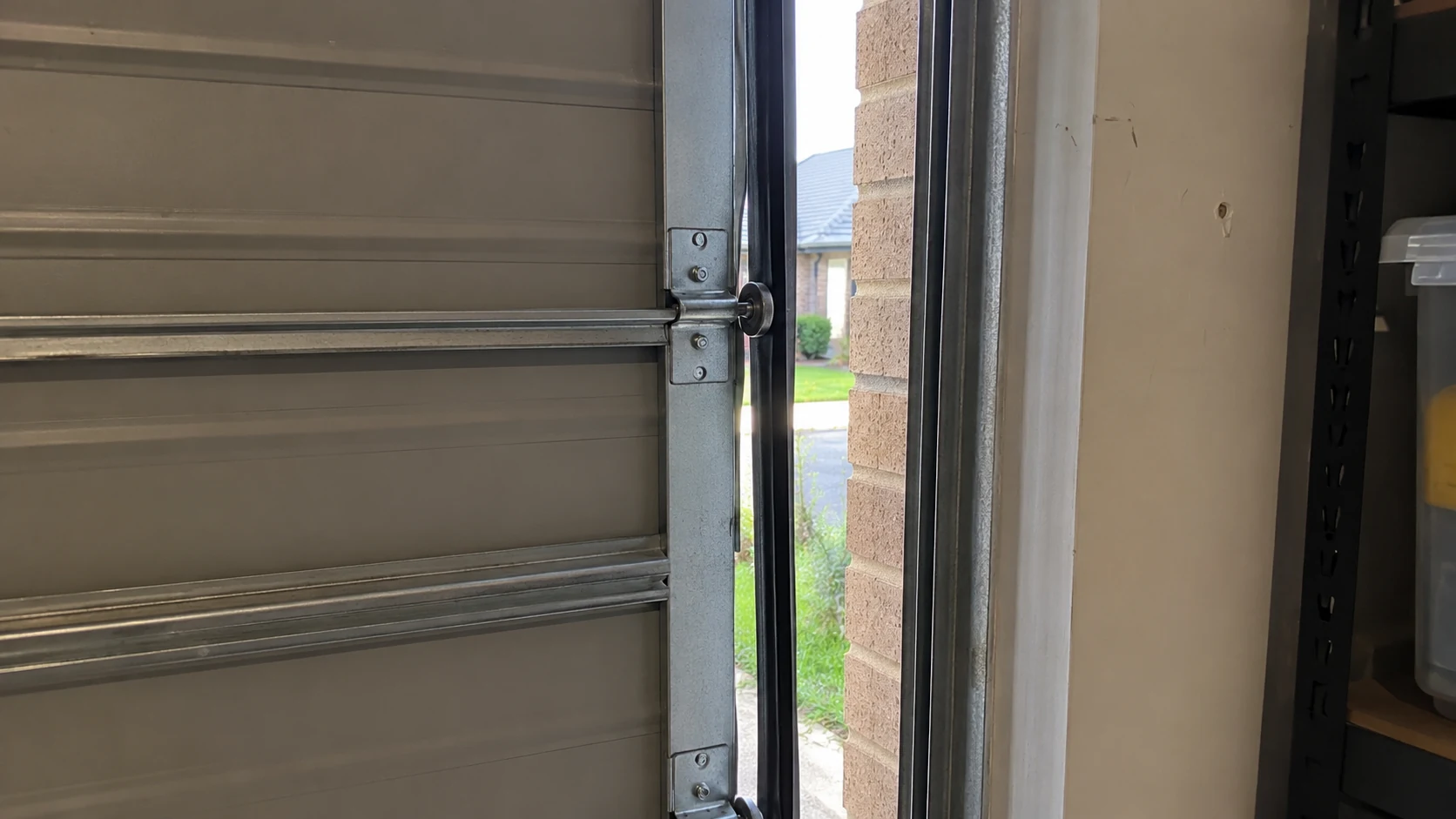
Gaps around a garage door rarely fix themselves. A professional inspection helps identify whether the problem is caused by worn seals, uneven flooring, misaligned tracks, opener settings, spring balance or damage to the door itself.
Advanced Garage Door Systems provides garage door repairs and servicing to help restore safe operation, improve sealing and reduce further wear on the door system.
A proper inspection looks beyond the visible gap. Technicians can check how the door sits, how it moves and whether the supporting hardware is working as it should.
This may include:
This process helps determine whether the issue is a simple seal replacement or a larger mechanical problem.
Once the cause has been identified, the correct repair can be completed to improve the seal and restore smoother operation.
Common solutions may include:
The aim is to help the door close evenly, seal properly and move safely without placing unnecessary strain on the opener or hardware.
Some older or damaged garage doors develop recurring gaps because the door is warped, poorly fitted or no longer suitable for the opening. In these cases, repeated minor repairs may not provide a long-term solution.
Replacement may be worth considering if the door is badly damaged, heavily corroded, repeatedly coming out of alignment or no longer sealing properly despite previous repairs. A correctly sized and professionally installed replacement door can improve security, reduce draughts and help prevent recurring gaps.
Garage door gaps are rarely just cosmetic. They can allow moisture, pests, dust and draughts into the garage while also pointing to alignment, seal, opener or hardware issues.
Identifying where the gap appears helps narrow down the likely cause. Small, even gaps may only need new weather seals, while uneven, sudden or persistent gaps often require adjustment or repair. Addressing the problem early helps protect the garage, improve security and keep the door operating safely.

