In bushfire-prone areas, the garage door is one of the largest external openings on a home. If it is poorly sealed, incorrectly specified or made from unsuitable materials, it can become a weak point for ember attack, radiant heat and flame exposure. While roofing, windows and wall cladding often receive more attention, garage doors in Sydney can also influence how well a property performs during a bushfire event.
Advanced Garage Door Systems explores how bushfire compliance applies to garage doors, what BAL ratings mean in practical terms and why materials, sealing, installation and product documentation all matter when choosing a garage door for a bushfire-prone property.
Bushfire compliance for garage doors is not simply about choosing a strong or metal door. It refers to the way the entire door system is designed, selected and installed to reduce the risk of fire entering the home through the garage opening. This includes the door curtain or panels, tracks, frame, seals, floor contact, ventilation openings and surrounding construction.
The required level of protection depends on the property’s Bushfire Attack Level, commonly known as its BAL rating. BAL ratings are used to assess the level of bushfire exposure a building may face, including ember attack, radiant heat and potential flame contact. As the BAL rating increases, the construction requirements become more demanding.
A garage door suitable for a lower BAL site may not be appropriate for a property exposed to higher radiant heat or flame risk. This is why garage doors in bushfire-prone locations should be selected based on the site’s BAL assessment, relevant building requirements and supporting product documentation rather than appearance or price alone.
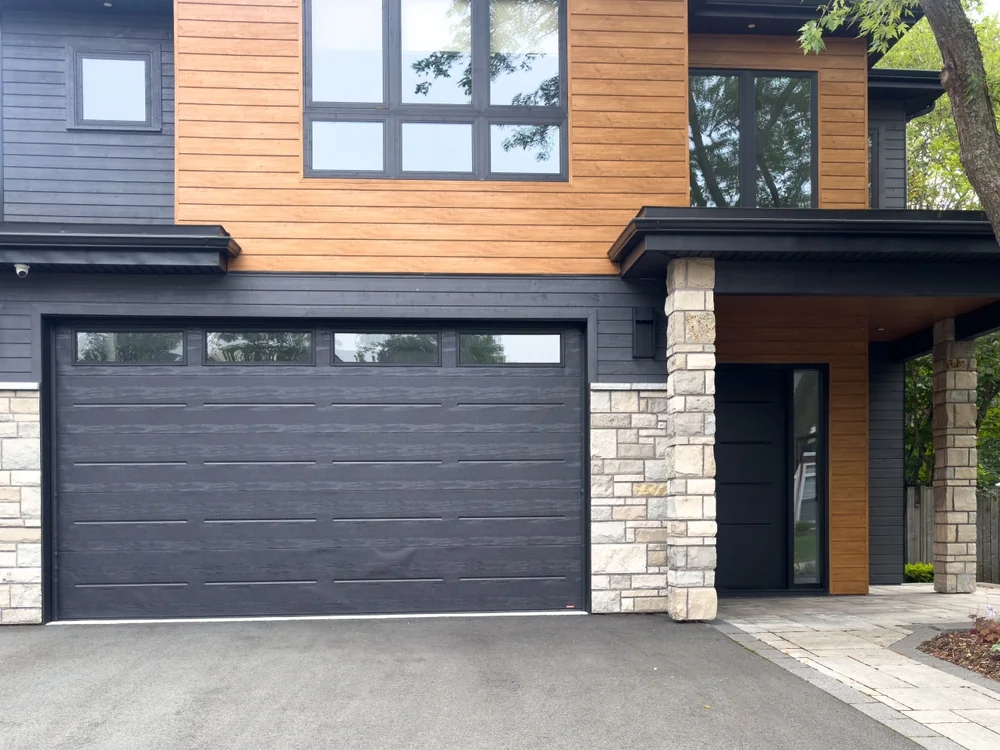
Bushfire requirements do not apply to every garage door replacement. They are generally relevant when a property is located on bushfire-prone land and the garage door forms part of the building envelope that must resist ember attack, heat and possible flame exposure.
This is most common in situations involving:
Local councils and state mapping tools identify bushfire-prone land. If a property falls within one of these areas, new building work will usually require a BAL assessment. The garage door specification may then form part of the approval process, especially where the garage is attached to the home or connected to internal living areas.
A simple like-for-like garage door replacement on an existing home may not always trigger a requirement to upgrade to current BAL standards. However, this should not be assumed. Insurance conditions, renovation approvals, council requirements and certifier advice can all affect what is required. Before choosing a door, homeowners should confirm the property’s bushfire status and seek advice from a building certifier, bushfire consultant or relevant local authority where needed.
BAL ratings directly influence which garage door systems are suitable for a bushfire-prone site. Lower BAL ratings generally focus on ember protection and the use of appropriate non-combustible or bushfire-suitable materials. Higher BAL ratings require stronger resistance to radiant heat and, in some cases, potential flame exposure.
For many bushfire-prone properties, steel and aluminium garage doors are preferred because they are non-combustible and generally perform better than common timber or plastic-based materials. Timber doors, decorative inserts, plastic components and unprotected ventilation openings can create problems unless they are specifically tested or accepted for the relevant BAL rating.
At higher BAL levels, the garage door may need to be part of a tested system rather than a collection of separate components. This can include the door curtain, tracks, seals, guides, frames and fixing methods. Product evidence, manufacturer specifications or test reports may be required to show that the door assembly is suitable for the nominated BAL.
This is especially important because a door panel alone does not determine compliance. A metal door can still perform poorly if the edges are exposed, the tracks are unsuitable, the bottom seal does not contact the slab or the installation leaves gaps around the opening.
Ember attack is one of the main reasons garage doors need careful attention in bushfire-prone areas. During a bushfire, embers can travel ahead of the fire front and be driven into small openings by strong winds. Once inside a garage, they can ignite stored items, vehicles, cardboard boxes, timber shelving, fuel vapours or other combustible materials.
Common garage door weak points include:
A bushfire-conscious garage door system should minimise these gaps as much as practical and use materials suited to the site’s BAL rating. This may include heavy-duty bottom seals, side brush seals, head seals, close-fitting guide tracks and metal mesh over any ventilation or access openings where required.
Seals also need to remain in good condition. Rubber, brush and fin seals can compress, crack or pull away over time, especially when exposed to heat, sun and regular operation. If daylight is visible around a closed garage door from inside the garage, this may indicate a potential ember entry point that should be checked.
Even a suitable garage door can fail to meet bushfire expectations if it is poorly installed. Bushfire performance depends on the full system working together, not just the door material. Tracks, guides, frames, fasteners, seals and surrounding construction all affect how well the door closes and how effectively it limits ember entry.
The door should be fixed securely to suitable construction, with no unintended openings around the frame or head. The slab or threshold should allow the bottom seal to sit evenly when the door is closed. If the floor is uneven, the door may leave small gaps that reduce its protective value.
Operational reliability also matters. A door that jams, does not close fully or has a damaged opener can leave the garage exposed during a bushfire threat. Regular maintenance helps ensure the door can be closed quickly and securely when needed. Springs, tracks, rollers, seals, motors and manual release systems should all be checked as part of routine garage door servicing.
While openers are not usually the main compliance focus, reliable operation is still important for bushfire preparation. A manual release mechanism, clear access to the door and backup operation options can be useful if power fails during an emergency.
Many existing garage doors can be improved to reduce ember entry, but not every door can be upgraded to meet a specific BAL requirement. The answer depends on the door type, age, material, condition, opening design and the BAL rating that applies to the property.
For modern steel roller or sectional doors in good condition, practical improvements may include:
These upgrades can improve practical bushfire resilience, particularly where ember entry is the main concern. However, they may not be enough where formal certification is required. In higher BAL areas, replacing an older timber door, damaged door or poorly sealed system with a tested steel garage door system may be necessary.
It is also important to understand that modifying an existing door can affect product certification. A door that has been tested as a complete assembly may only comply when installed with the specified seals, tracks, guides and hardware. Substituting parts or retaining old components may reduce performance or make compliance difficult to prove.
Before committing to a garage door for a bushfire-prone property, the site’s BAL rating should be confirmed. This may be done through a BAL assessment, building approval documentation or advice from a bushfire consultant or certifier.
For new builds, major renovations or compliance-related replacements, documentation may be required to show that the selected garage door system is suitable for the property. This may include manufacturer specifications, test reports, installation instructions or written confirmation that the door assembly is appropriate for the nominated BAL.
For existing homes, documentation may also be useful for insurance records, future property sales or renovation approvals. Keeping records of the selected door, installation details and maintenance history helps demonstrate that bushfire risk has been considered properly.
Bushfire compliance for garage doors extends beyond choosing a durable door panel. Effective protection depends on the full system, including the door material, BAL suitability, sealing, installation quality, operating reliability and supporting documentation.
For homes in bushfire-prone areas, the garage door should be treated as part of the wider building envelope rather than a standalone feature. A well-selected and properly installed door can help reduce ember entry, improve resilience and support compliance with the requirements that apply to the property.

