Advanced Garage Door Systems understands that small garages present some of the biggest challenges when it comes to choosing the right door. For homeowners comparing garage doors in Sydney, limited headroom, tight driveways, short internal lengths and awkward openings can quickly turn a standard door into a daily frustration. This article explains which garage door styles work best in compact spaces, how to maximise every inch of clearance and which features can genuinely improve day-to-day use in a smaller garage. It also looks at how storage needs, insulation and security should be considered when planning a door for a limited space. With the right information, you can identify a design that suits your garage, avoid common sizing mistakes and choose a solution that improves both convenience and kerb appeal.
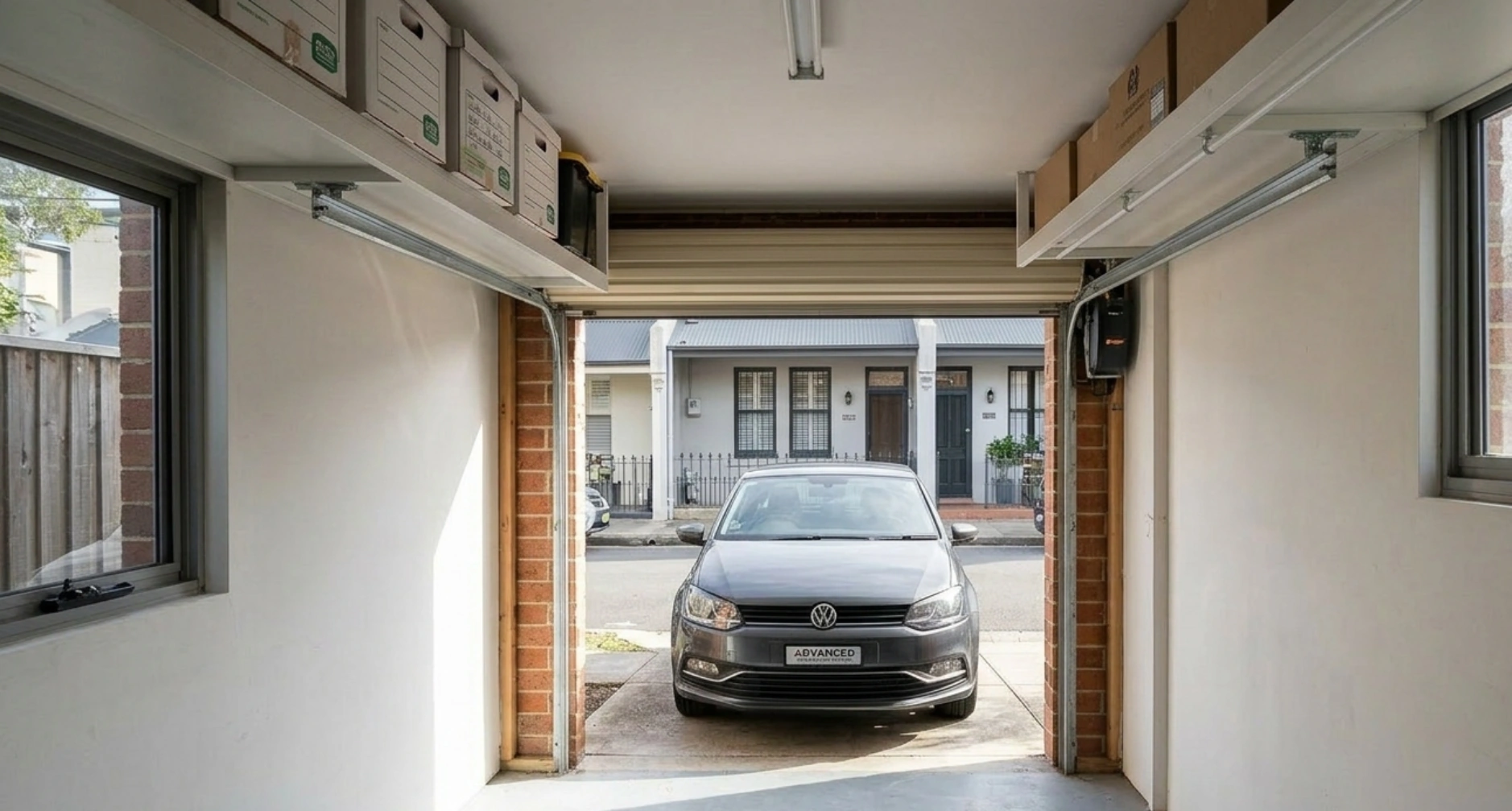
Before choosing a garage door for a small space, it is essential to understand exactly how much room is available. Many doors may technically fit the opening, but that does not mean they will operate smoothly or preserve the overhead and side space needed for storage or a vehicle.
Precise measurements are one of the most important starting points when selecting the right door style and hardware for a compact garage. They help determine not only the size of the door but also which operating system is likely to work best. For example, a door that requires a full standard track may not be suitable if the ceiling is low or cluttered with ducting or beams. Taking the time to assess the space properly can help avoid costly changes once installation is underway.
The first step is to measure the clear opening size. Measure the width between the finished inside edges of the jambs at the widest point, then measure the height from the finished floor to the bottom of the header. These measurements determine the nominal door size.
It is also important to check the floor for slope. If one side is lower than the other, the effective height of the opening can change. In a small garage, even a slight slope can create a gap under the door on one side if the chosen door style is not suited to the opening.
Headroom is the clear space between the top of the opening and the lowest obstruction on the ceiling, such as joists, pipes or openers. Standard sectional doors usually need about 12 inches of headroom for tracks and springs, while low-headroom kits can often work with as little as 6 to 8 inches. If there is less space than that, a different door style, such as a side-sliding or roller door, may be more suitable.
Backroom is the distance from the garage door opening to the first obstruction on the ceiling or rear wall. For most sectional doors, this space must be at least equal to the door height and often slightly more to allow room for the opener. In a short single-car garage, limited backroom can rule out some overhead systems and make compact track layouts or wall-mounted operators a better fit.
Side room refers to the space between each side of the opening and the nearest wall or obstruction. Traditional torsion spring setups usually need several inches of clear space on each side for tracks and hardware. In tighter garages, limited side room can affect the spring type and track style used or point towards a jackshaft opener mounted on the wall instead of overhead.
It is also important to look closely at non-structural obstacles that can reduce usable space. Shelving near the front of the garage, lighting close to the door path or ductwork hanging below the ceiling can all affect which system will work properly. Identifying these details early makes it easier to choose a door that operates freely without sacrificing valuable storage in an already compact garage.
For a small garage, the type of door matters as much as the size. The right style can save valuable ceiling space, improve parking clearance and make daily use easier. Choosing the right door type is especially important in garages with tight driveways, low ceilings or limited side room, as these constraints can affect both operation and overall practicality.
Below are some of the most practical garage door types for small garages, along with the main advantages and key considerations for each option.
Sectional overhead doors are the most common choice and work very well in most small garages. The door is made of horizontal sections that travel up on tracks and then rest close to the ceiling. This design uses vertical space efficiently, so the door does not swing out into the driveway.
For compact garages, some of the most practical features to look for include:
Sectional doors also pair easily with compact openers mounted either on the ceiling or on the side of the door, which can help free up storage space above a vehicle.
Roll-up doors are ideal when every inch of ceiling space matters. Instead of running along horizontal tracks, the curtain coils into a compact drum above the opening. This leaves most of the ceiling clear for shelving, racks or lighting.
Roll-up doors are especially useful in these situations:
They are often a practical option for small urban garages or laneway garages where space is especially constrained.
When overhead systems are not practical, side-moving doors can be a useful alternative.
Side-sliding doors run along a track at the top and bottom of one wall and park neatly against the side of the garage. They work well where the ceiling is low but there is enough clear wall space. This style can also be easier to open manually, which may suit small garages without an opener.
Side-hinged doors open like large doors on hinges. They free the ceiling completely and can help preserve headroom in very shallow garages. However, they do require clear space in front of the garage for the door leaves to swing and they can be more affected by wind.
In a small garage, every centimetre between the top of the door and the ceiling matters. The right track layout and opener style can turn an awkward low-headroom space into a practical parking and storage area without major structural work. Hardware that keeps tracks and motors close to the ceiling can help preserve as much clear height as possible, which is especially important in compact garages.
Choosing the correct combination depends on the exact headroom measurement above the opening, the depth of the garage and whether there are obstructions such as beams or pipes. Accurate site measurement is essential for matching the garage with track and opener options that allow the door to operate smoothly while maintaining clearance for vehicles and overhead storage.
Standard sectional doors need a reasonable amount of space above the opening for the curve and horizontal tracks. In a small or low garage, this is often not available. Low-headroom track systems use a tighter radius and modified layout so the door can still open fully with reduced space.
Several approaches work well for compact garages. Dual-track low-headroom kits place the top section of the door on a separate track so it can break earlier around the curve, reducing the headroom requirement. Rear torsion spring setups move the spring assembly from directly above the opening to further back along the horizontal track, keeping the area above the lintel as clear as possible. A high-lift track is useful where the ceiling is higher than the opening and overhead storage or a car lift is planned. It carries the door higher up the wall before it turns horizontally, so the open door sits closer to the ceiling and leaves more usable vertical space at the front of the garage.
The choice of opener can also affect headroom. Traditional trolley-style openers with a rail down the centre of the ceiling often hang lower and can limit where lights, shelving or taller vehicles can go. In small garages, opener designs that sit to one side or remain close to the door are often the more practical option.
Jackshaft or wall-mounted openers fix to the side of the torsion shaft at the front of the garage, so there is no long rail across the ceiling. This frees up central headroom, which is ideal for 4WDs, roof racks or overhead storage racks. Where a rail-type opener is preferred, low-profile units with slim rails and compact heads can help reduce how far the system hangs into the space. These can be useful where ceiling clearance is tight but a wall-mounted opener is not suitable.
Every inch counts in a small garage. Before choosing a new door, it is important to look carefully at both the inside and outside of the opening to make sure the door will operate safely without wasting valuable room. The right choice depends on the headroom above the opening, the side room on each side and the depth of the garage. Measuring these areas accurately and thinking about how the space is used every day will help avoid doors that scrape vehicles, block storage or feel awkward to operate.
Headroom is the space between the top of the garage opening and the ceiling or any overhead obstructions. Traditional sectional overhead doors usually need at least 10 to 12 inches of clear headroom for tracks and a standard torsion spring. In very tight garages, low-headroom track kits or side-mounted jackshaft openers can reduce the space required, but they still need a few inches of clearance to operate safely.
Backroom is the distance from the opening to the rear wall. The garage must be deep enough to store the full height of the door sections when open. A 7-foot-tall sectional door typically needs at least the door height plus 18 inches of backroom. If the garage is shallow, a roll-up or side-sliding door may be more suitable, as these designs use less ceiling depth.
Side room is the open space on each side of the garage opening, measured from the edge of the opening to the wall or any obstruction. Standard torsion systems usually require about 4 to 6 inches on each side for tracks and hardware. In a very narrow garage, this can be a problem, especially if shelves, conduit or plumbing are close to the opening. Low-profile tracks or alternative spring setups can sometimes help in these situations, but there must still be enough space for safe installation and ongoing maintenance.
Wall space also matters for swing-out carriage doors or side-hinged doors. These models need clear surfaces beside the opening for hinges and hardware, as well as enough room inside or outside for the door panels to swing without hitting vehicles or walkways.
Choosing the right garage door for a small garage involves more than simply finding one that fits the opening. Headroom, side clearance, garage depth, insulation, hardware quality and opener design all affect how practical the door will be in everyday use. In a compact space, the right combination of door style and hardware can improve access, preserve storage space and make the garage easier to use overall. With accurate measurements and a clear understanding of how the space needs to function, it becomes much easier to choose a door that works smoothly, suits the garage properly and adds long-term convenience as well as kerb appeal.

