Choosing the right garage door size is essential for comfortable vehicle access, smooth operation and a secure fit. A door that is too narrow or low can make parking difficult, while overlooking headroom and side clearance can lead to costly modifications. Advanced Garage Door Systems assists with choosing roller garage doors in Sydney that suit the garage, vehicles and everyday needs.
Standard sizes provide a useful starting point, but the right dimensions depend on the existing opening, available clearance, driveway layout and the vehicles using the garage. 4WDs, dual-cab utes, vans and roof accessories may require additional height or width.
Accurate measurements also help determine whether a standard or custom-sized door is more suitable. Considering these factors before ordering can help ensure the roller door fits correctly and provides comfortable, reliable access for years to come.
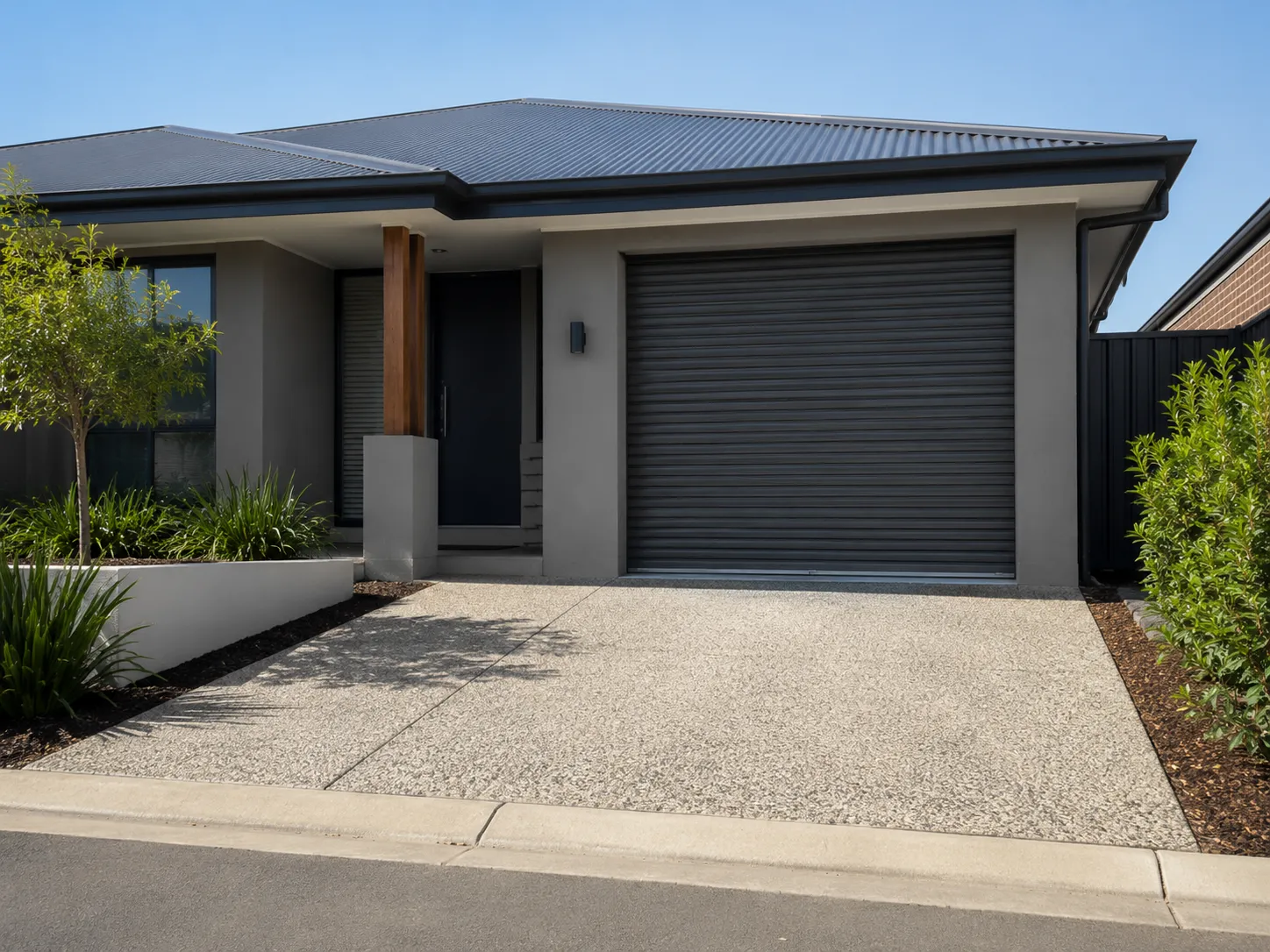
Roller garage doors are available in a range of common sizes designed around typical garage openings and vehicle dimensions. Understanding these sizes makes it easier to determine whether a standard door is likely to suit the garage or whether a custom option may be required.
Most residential garages use either a single or double roller door. Dimensions vary between manufacturers and door systems, but common residential sizes include:
A 2400 mm wide by 2100 mm high door is a common option for a single garage and generally suits standard cars and smaller SUVs. Older garages may have openings closer to 2100 mm wide, which can feel restrictive for wider modern vehicles.
For double garages, a 4800 mm wide by 2100 mm high door is commonly used for two vehicles. Narrower openings around 4200 mm may also be suitable, although parking can become less comfortable when two larger vehicles are involved.
Standard dimensions may not suit every garage or vehicle. A larger or custom-sized roller door may be needed for:
The appropriate size should be based on the actual clear opening, available clearance and vehicle dimensions, rather than assuming a nominal size will provide sufficient access. Manufacturer specifications should also be checked because available sizes and installation requirements vary between roller door systems.
The roller door curtain size and the garage opening size are not necessarily the same. The opening size refers to the clear space available for a vehicle to pass through, while the curtain size refers to the door itself, including the sections that sit within the side guides and roll around the drum.
The opening size, also known as the daylight opening, is the clear width and height between the finished sides and top of the garage entrance. This is the space the vehicle actually passes through.
When measuring an existing garage, the finished opening should be measured rather than the old door curtain. Brickwork, framing and other components can reduce the available clearance, which is important for wider vehicles, 4WDs and vehicles with roof accessories.
A roller door curtain consists of interconnected slats that roll around the drum above the opening, with its edges running inside the side guides. Because the curtain needs to engage with these guides, its manufactured dimensions can differ from the clear opening.
The required allowance varies between roller door systems, so the curtain size should not be calculated by simply adding a fixed amount to the opening. The manufacturer or installer should confirm the correct curtain, guide and bracket dimensions based on the actual garage measurements.
For this reason, vehicle clearance should always be assessed against the actual finished opening, rather than relying solely on the nominal roller door size.
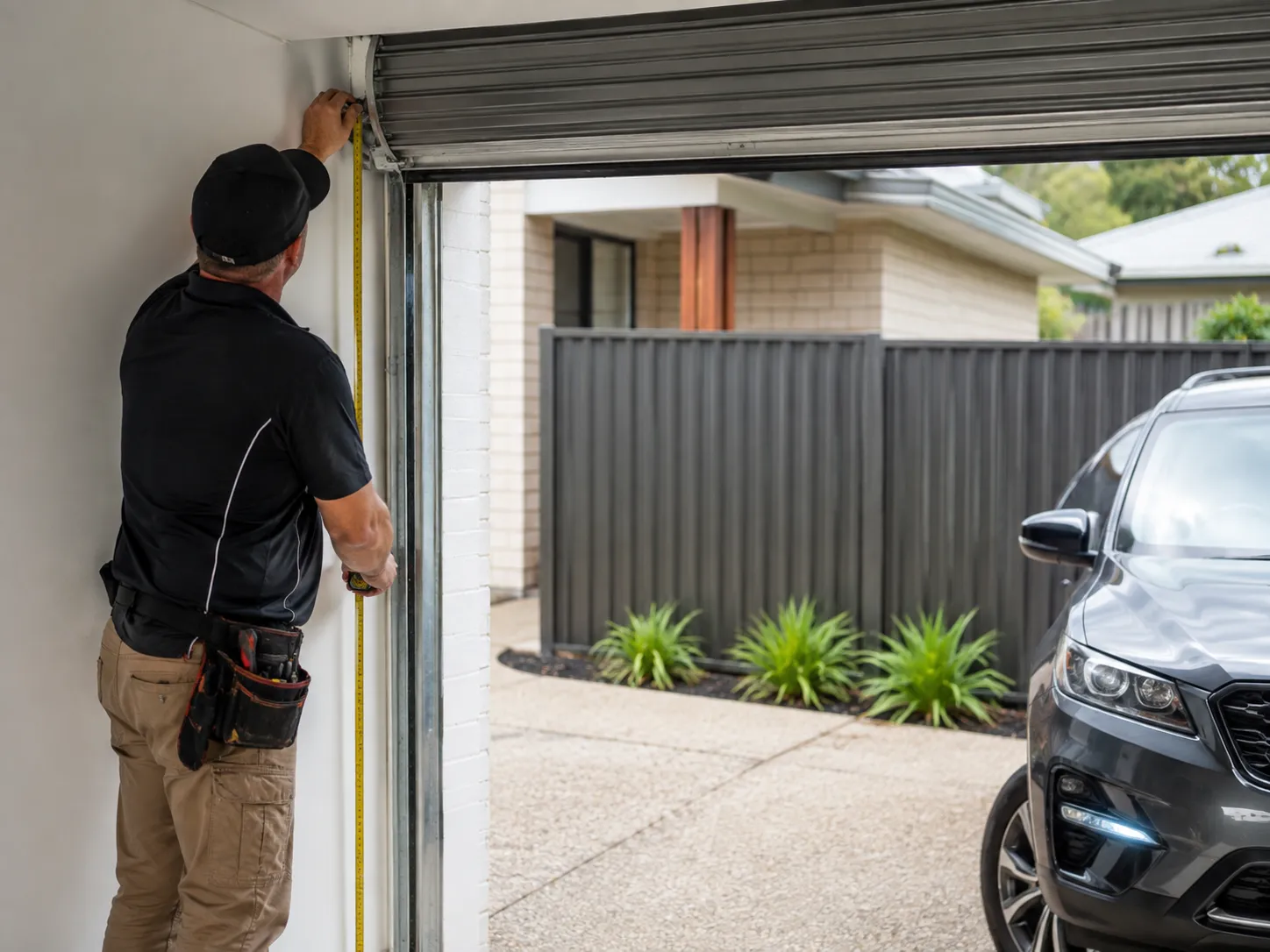
Accurate measurements are essential when choosing a roller garage door. The opening width and height, headroom, side room and internal clearance all need to be checked to ensure the door fits correctly and operates smoothly.
Take measurements in millimetres and record the smallest measurement where dimensions vary. This gives the installer a reliable basis for selecting the appropriate door size and installation configuration.
Measure the clear opening, rather than the existing door curtain or panels.
For the width, measure between the finished sides of the opening at the top, middle and bottom. Use the smallest measurement to account for walls that may not be perfectly square.
For the height, measure from the finished floor to the underside of the lintel on both sides and in the centre. Again, use the smallest measurement. Check the floor, jambs and lintel for slopes, unevenness or other irregularities that could affect the fit.
Measure the headroom from the top of the opening to the lowest obstruction above it, such as a beam, duct, light fitting or ceiling fixture. The required space varies between roller door systems, so the manufacturer's specifications should always be confirmed.
Also measure the side room on both sides of the opening. This space is needed for the guides, brackets and motor. Walls, shelving, pipes and other obstructions can reduce the available space and affect the size or configuration of the door.
Measure the backspace from the inside face of the opening into the garage, checking for walls, beams, storage and other obstructions. The rolled curtain and motor need sufficient room to operate without interference.
Also identify overhead lights, existing tracks, shelving or other items that could obstruct the door. Providing these measurements to the installer helps confirm that the selected roller door and operating system are suitable for the available space.
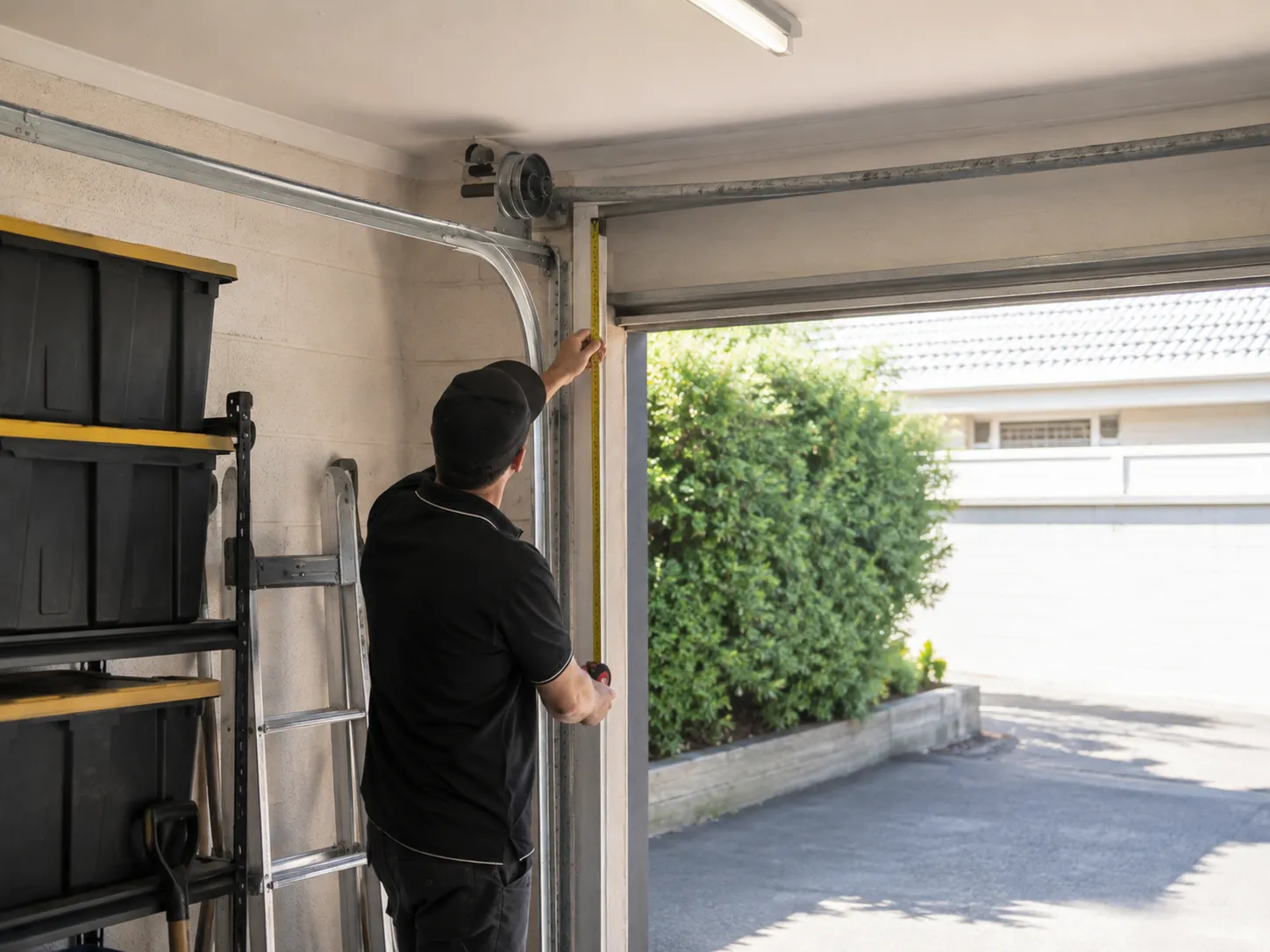
Having enough space above and besides the garage opening is just as important as getting the door width and height right. The roller curtain, drum, brackets, guides and motor all require clearance to operate correctly and the exact requirements vary between door systems.
Headroom is the space between the top of the opening and the lowest obstruction above it. This area needs to accommodate the rolled curtain, drum and motor. Many residential roller door installations require around 350-450 mm of headroom, although larger, heavier or particular motorised systems may require more. The manufacturer's specifications should always be confirmed before installation.
Side clearance is the space besides the opening required for the guides, brackets and operating mechanism. Requirements can vary depending on the door and motor configuration, with some residential systems needing roughly 25-75 mm or more per side.
The entire area should remain clear of pipes, shelving, downpipes and other obstructions. Where space is restricted, a different mounting arrangement or low-headroom solution may be available, but this should be determined according to the specific door system rather than generic measurements.
The size of a roller garage door affects more than whether a vehicle can physically fit through the opening. Width, height, driveway access and the available space inside the garage all influence how easily vehicles can enter, exit and park.
A door that provides only minimal clearance can make daily use frustrating for wider SUVs, 4WDs and dual-cab utes. When selecting a size, consider:
The aim is to provide enough clearance for comfortable everyday use without choosing a door that is unnecessarily large for the garage. The final size should take into account the vehicle dimensions, driveway layout, internal parking space and manufacturer's installation requirements.
As a roller door becomes wider, taller or heavier, the opener needs to handle a greater load. Door dimensions, curtain weight, construction and frequency of use should therefore be considered when selecting the motor.
A correctly matched roller door opener can help the door operate smoothly and consistently, while an unsuitable motor may experience unnecessary strain.
When choosing an opener, consider:
A properly matched opener should operate the door without excessive noise, hesitation or strain. If a door becomes difficult to open, repeatedly stops or moves unevenly, the cause may not simply be its size. Worn components, damaged guides, poor alignment or an unbalanced curtain can also affect operation.
Yes. Roller garage doors have practical minimum and maximum sizes, but there is no single limit that applies to every door. The available range depends on the manufacturer, curtain profile, door weight, drum size, motor capacity and the structural space available for installation.
Smaller doors can be made for narrow garages or restricted openings, while larger systems are available for double garages, workshops and commercial applications. As a door becomes wider or taller, however, the curtain becomes heavier and may require stronger brackets, a larger drum, a suitable motor and additional structural support.
The practical size limit is also affected by the garage itself. Before selecting an unusually small or large roller door, consider:
For very large openings, a standard residential roller door may no longer be suitable. A heavy-duty or commercial roller door, custom system or alternative door type may provide a better solution. Comparing roller and sectional doors can also help determine whether another door configuration would better suit the available garage space.
Most garages can accommodate standard roller door sizes, but some properties and vehicles require a custom solution. Custom sizing may be necessary when the opening is unusually wide or high, available headroom is limited or the garage needs to accommodate larger vehicles and equipment. Custom roller garage doors can provide greater flexibility where standard dimensions do not suit the opening, vehicle clearance or available installation space.
Older garages and renovated properties may have openings that do not match common dimensions. Changes to brickwork, flooring, framing or structural supports can also reduce the available width or height.
A custom-sized door can be made to suit these variations, helping achieve a proper fit without unnecessary structural modifications.
Custom sizing may be suitable for garages used for:
Extra height can provide clearance for taller vehicles, while additional width can make entry easier where vehicles approach at an angle or nearby structures restrict access.
Low ceilings, beams, ducting and other obstructions can restrict the space available for the roller curtain, drum and opener. In these situations, a custom door or suitable low-headroom configuration may help maximise the available opening.
Where clearances are limited, professional site measurement is important. Small differences in the opening or surrounding structure can determine whether a standard door will fit or whether a custom-sized roller garage door is more appropriate.
Choosing the right roller door size ultimately means matching the door to the garage opening, vehicle clearance, available space and intended use. Standard sizes will suit many homes, but the most suitable option depends on the actual conditions at the property.
Before ordering, confirm:
For most homes, a standard roller door will be suitable, but larger vehicles, angled driveways, unusual openings or limited structural space may require a wider, taller or custom-sized option. Planning for future vehicle changes can also provide greater flexibility during a new build or renovation.
Choosing the right roller garage door size means considering the opening, vehicle clearance, headroom, side room and how the garage will be used. Understanding common sizes, curtain dimensions and opener requirements can help avoid costly mistakes while providing comfortable, reliable access.
Advanced Garage Door Systems can assess these factors, take accurate measurements and recommend a suitable standard or custom solution. A professional measure and quote can help ensure the new roller door fits correctly, operates smoothly and provides lasting security and convenience.

