Choosing between one double garage door and two single garage doors can affect more than a home's appearance. The configuration can affect vehicle access, daily convenience, security, maintenance and how effectively the garage suits changing household needs.
Advanced Garage Door Systems can help compare both options based on the garage layout, vehicle requirements and intended use. Considering these factors early can help avoid unnecessary costs and ensure the chosen setup works well.
When comparing garage doors in Sydney, factors such as installation requirements, energy efficiency, design, reliability and value can all influence the decision. Understanding the differences between one wide door and two separate doors makes it easier to choose a configuration that suits the property.
The garage door configuration can affect how easily vehicles enter, exit and manoeuvre within the garage. Door width, driveway space and the number of vehicles using the garage determine which setup is more practical.
A double door provides one wide opening with greater clearance, while two single doors create separate access points. The better option depends on vehicle size, parking habits and whether vehicles are used independently.
A double garage door provides a wider opening, giving larger vehicles like SUVs and utes more room to enter and exit. The additional clearance can also make it easier to approach the garage from a narrow or angled driveway and adjust the vehicle when parking.
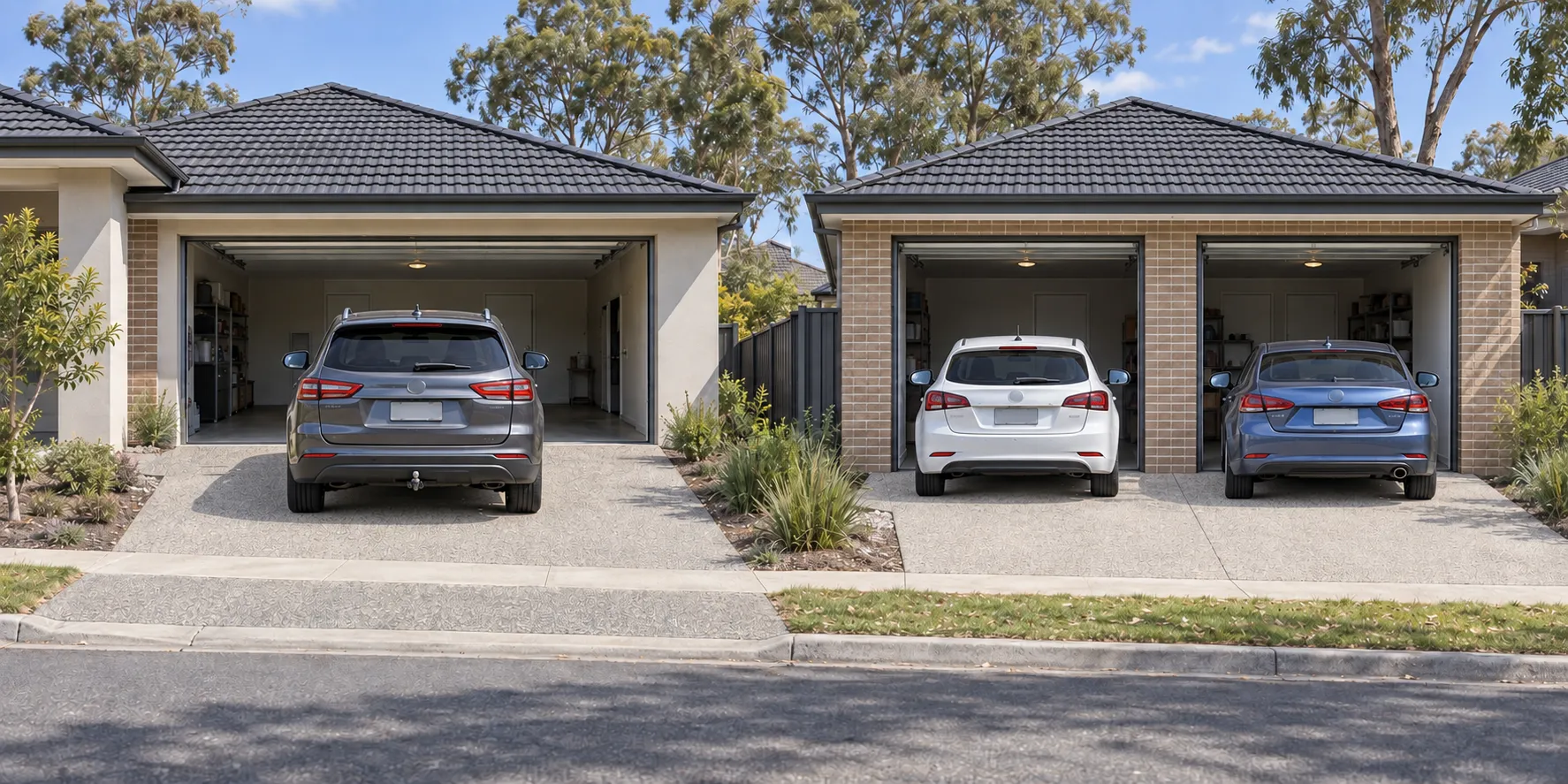
Two single doors provide dedicated openings for each vehicle. This can suit standard vehicles and garages where each car has its own parking bay, although the narrower openings may require more precise positioning where space is limited.
For households with different vehicle sizes or awkward driveway access, the wider opening of a double door can provide greater flexibility. Two single doors may be more practical where separate parking bays and independent vehicle access are priorities.
Two single doors allow each side of the garage to be opened independently. One vehicle can leave while the other remains behind a closed door, which can be useful when household members have different schedules or one bay is used partly for storage.
A double door provides shared access across the garage width. This can make moving vehicles or bulky items easier, but the full opening is exposed whenever the door is raised.
Overall, a double door suits households that prioritise wide access and flexible parking, while two single doors can provide greater separation between garage bays.
The cost of one double garage door versus two single doors depends on more than the door price. Installation, operating hardware, automation, structural changes and future maintenance can all affect the overall investment.
Understanding the factors that influence garage door replacement costs can help homeowners compare door sizes, materials, automation and installation requirements more accurately.
A double door can sometimes have a lower initial cost because it uses one door system and one opening. Two single doors require separate systems and may involve additional hardware and installation work, although the final cost depends on the products selected and the existing garage structure.
A double door requires one set of tracks, springs and other operating hardware, along with one appropriately sized opener. This can make installation more straightforward where the garage is already suited to a wide opening.
Two single doors require separate tracks, springs and other hardware for each opening. If both doors are automated, each will typically require its own opener and controls. This can increase the initial investment when higher-quality doors or automation systems are selected.
Structural changes can also affect the price. Converting an existing opening from one configuration to another may require additional framing or other building work.
Long-term costs depend on usage, maintenance and the components used in each system. A double door has fewer individual systems to service, but its larger components can carry greater loads and may require heavier-duty hardware.
Two single doors have more individual components to maintain, but a fault with one door does not necessarily affect the other. Energy use can also depend on how the garage is used. Two single doors allow one side to remain closed when only one vehicle needs access, while a double door exposes the full opening when raised.
The most cost-effective option therefore depends on the garage layout, automation requirements, usage patterns and expected maintenance rather than the number of doors alone.
Maintenance requirements can vary between one double garage door and two single doors. The main differences involve the number of components, the load placed on each system and what happens when a door or opener develops a fault.
A double garage door is larger and heavier, so its springs, cables, rollers and opener need to handle greater loads. Correctly sized hardware and regular servicing are important to keep the system operating smoothly and reduce unnecessary wear.
Two single doors divide the load between separate systems, meaning each door has lighter individual components. However, there are more total springs, tracks, rollers and openers to inspect and maintain.
Neither configuration is automatically easier to maintain. A double door has fewer systems but heavier components, while two single doors have more systems with lighter individual loads.
A failure affecting a double door can prevent access through the entire garage until the problem is repaired. A damaged spring, track or opener can cause greater disruption when there is only one garage door.
With two single doors, a fault will affect only one side. The second door can remain operational, allowing continued access to one vehicle while the affected system is repaired.
The same principle applies to garage door openers. A double door will use one larger opener, while two single doors use separate openers. Two systems provide greater redundancy but also create more components that may eventually require servicing or replacement.
Regular professional maintenance can help identify worn springs, damaged cables, track alignment problems and opener issues before they develop into more repairs.
Two single garage doors can suit properties where the garage is divided into separate bays, one side is used for storage, or household members need independent access. They can also work well where an existing central support already divides the garage.
A double garage door can be more practical where the driveway is narrow or awkward, larger vehicles need additional clearance, or vehicles and bulky items need to move across the full garage width.
Consider the following:
Both garage door configurations can provide effective security and safe operation when fitted with quality doors, reliable locking systems and correctly installed automation. The main difference is how access is controlled and how a fault affects the garage.
A double door provides one large access point, while two single doors allow each side to be secured and operated separately.
A double door can simplify security because there is one opener, locking system and access point to manage. However, opening it provides access to the entire garage.
Two single doors offer greater separation between garage bays. Each can have its own opener and locking system, allowing one side to remain closed while the other is in use. Both configurations can also incorporate features such as rolling-code remotes, automatic locking and smartphone-connected controls.
The overall security of either configuration depends largely on the quality of the door, locking system, automation and installation.
Automatic garage doors should have appropriate safety features, including photoelectric sensors and automatic reversal systems, to help prevent the door from closing onto people, vehicles or objects.
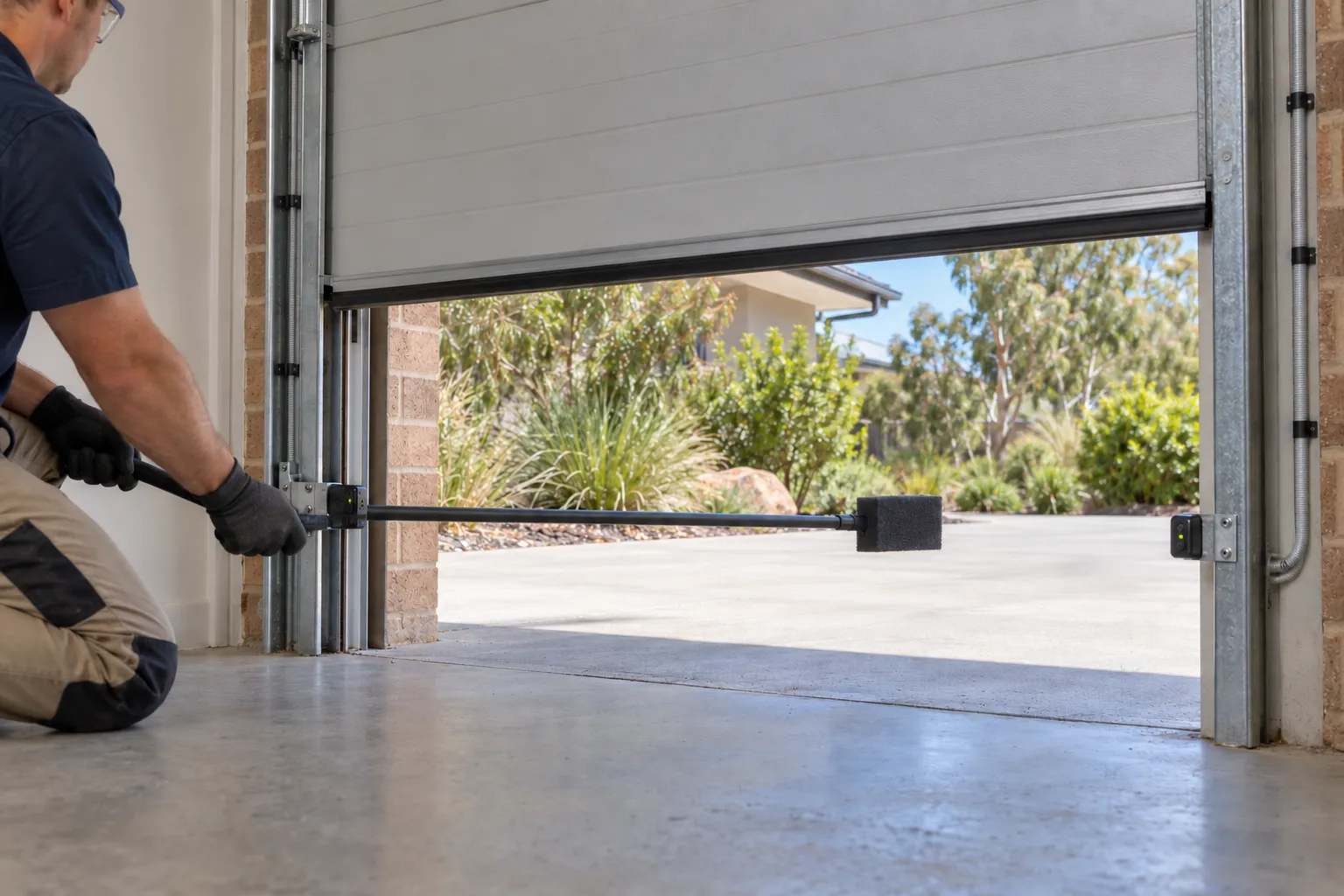
A double door uses one safety system across its wider opening, while two single doors have separate safety systems. A fault with a double door can affect access to the entire garage, whereas a problem with one single door will leave the other side operational.
Garage door springs, cables and other high-tension components can pose serious risks if handled incorrectly. Repairs and safety-system adjustments should therefore be carried out by a qualified professional.
Energy efficiency depends largely on insulation, weather sealing, door construction and how often the garage is opened. Both a double door and two single doors can provide good thermal performance when properly installed and sealed.
The main difference appears when only one vehicle needs access. Two single doors allow one side to remain closed, while a double door opens the entire garage each time it is used.
An insulated garage door with quality seals can help reduce heat transfer, drafts, dust and moisture. A double door can perform well across the full opening, while two single doors can provide similar insulation when both use comparable materials and sealing systems.
The condition and fit of the doors are more important than the number of doors alone. Worn seals, gaps around the frame or poor installation can reduce the thermal performance of either configuration.
Australian Government guidance on insulation and draught proofing explains how insulation and properly sealed openings can reduce unwanted heat transfer and outdoor airflow.
Two single doors can offer an advantage when vehicles are used at different times. Opening one door leaves the other side closed, limiting the amount of outdoor air entering the garage and helping maintain more stable conditions in the unused section.
A double door exposes the full opening whenever it is raised, which can allow more outdoor air into the garage. For households that regularly move both vehicles together, however, the difference may be minimal.
Neither configuration is automatically more energy efficient. Insulation quality, weather sealing, door fit and usage patterns are more important factors when comparing the two options.
Both a double garage door and two single doors can be customised to complement a home's architecture. The main visual difference is that a double door creates one broad feature, while two single doors divide the facade and can create greater symmetry.
Colours, materials, finishes, panel profiles, windows and decorative hardware are available across many door styles. The choice largely depends on the home's existing design and whether a streamlined or more defined appearance is preferred.
A double garage door can create a clean, uninterrupted appearance that suits contemporary homes, while two matching single doors can provide a more structured look suited to traditional or symmetrical facades.
Both configurations can incorporate different colours, materials, panel designs and window styles. Decorative hardware can add character to traditional designs, while simpler finishes can support a modern appearance.
Because garage doors can occupy a large part of the front facade, their design should work with existing features like the roofline, brickwork, cladding, windows and front entry.
A double door can provide a cohesive appearance across a wide garage, while two single doors can help break up the facade and create visual balance. Neither option offers universally greater customisation, so the best choice depends on the property's proportions, architectural style and available door designs.
Considering the building’s proportions, materials and architectural details can make it easier to choose a garage door that fits the home without overwhelming the front facade.
Garage doors can have a strong visual impact because they often cover a large part of a home's front facade. A double door creates one broad feature, while two single doors divide the frontage into separate sections.
Neither option is automatically more attractive. The best choice depends on the home's architectural style, garage proportions and how the door design works with the rest of the exterior.
A double garage door can create a clean, uninterrupted appearance that suits contemporary homes and simple architectural styles. Its wider surface can also make the garage appear more spacious, although the large expanse may become a dominant feature on smaller facades.
Two single doors provide greater visual separation and can create a balanced, symmetrical appearance. This can complement homes with centred entrances, evenly spaced windows or more traditional architectural details.
A well-designed and maintained garage door can contribute positively to street appeal regardless of the configuration. The condition, colour, materials and overall design can have more visual impact than simply choosing one door or two.
For properties where future resale is a consideration, the garage door configuration should complement the existing facade rather than follow a trend that may clash with the home's style. Both options can provide strong street appeal when the proportions and design are suited to the property.
The installation requirements for a double garage door and two single doors depend on the existing garage structure, available space and selected door system. Opening dimensions, structural support, headroom and side clearance all need to be considered before installation.
A double door requires one wide, adequately supported opening, while two single doors require separate openings and a suitable central section between them. The right configuration will depend on whether the garage is being built, renovated or fitted with replacement doors.
Vital installation considerations could be:
A suitable garage door configuration should work with the existing structure rather than require unnecessary alterations. A professional assessment can help determine which option provides the right fit, clearance and support for reliable long-term operation.
A double garage door can offer better value for households that prioritise wide vehicle access, simpler operation and fewer individual systems to maintain. Its broad opening can also provide greater flexibility for larger vehicles and bulky items, while a well-maintained door can contribute to the home's overall appearance and appeal.
Two single garage doors may provide better value where independent access and flexibility are more important. Each side can be operated separately, allowing one bay to remain closed when not in use, while a fault with one door does not necessarily prevent access to the other. This can be useful for households with different vehicle schedules or separate storage needs.
The most suitable choice depends on the garage structure, vehicle requirements, maintenance expectations and how the space is likely to be used in the future. Quality doors, suitable hardware, reliable automation and professional installation can help either setup deliver lasting value.
Choosing between one double garage door and two single garage doors ultimately depends on the property layout, vehicle needs and priorities of the household. A double door can provide wider access, a simpler appearance and convenient parking, while two single doors offer independent access, greater separation and continued use of one side if the other requires repairs.
Advanced Garage Door Systems can assess the practical differences between configurations and select an option suited to the garage and its intended use. Considering installation, maintenance, security, energy efficiency, appearance and long-term value can help ensure the chosen garage door remains practical and reliable.

