Choosing the right roller garage doors in Sydney for a low ceiling is very different from choosing one for a standard height opening. Limited headroom affects everything from the style of door that will fit to the type of lifting system required and even how smooth and quiet the door will feel in daily use. Advanced Garage Door Systems helps homeowners and businesses work within these constraints so they can still enjoy a reliable, safe and attractive door that makes the most of every centimetre of available space.
This article explores the most effective garage door options for low ceilings and the types of hardware and openers designed for tight clearances. You will learn how low-headroom tracks, specialised spring systems and tailored automation can solve space problems, how to avoid common pitfalls that lead to noisy or unreliable operation and how the right specification can turn an awkward opening into a smooth, practical entrance. This will help anyone with a restricted ceiling height choose a solution that protects vehicles, improves daily convenience and adds value to their property without compromising on safety or performance.
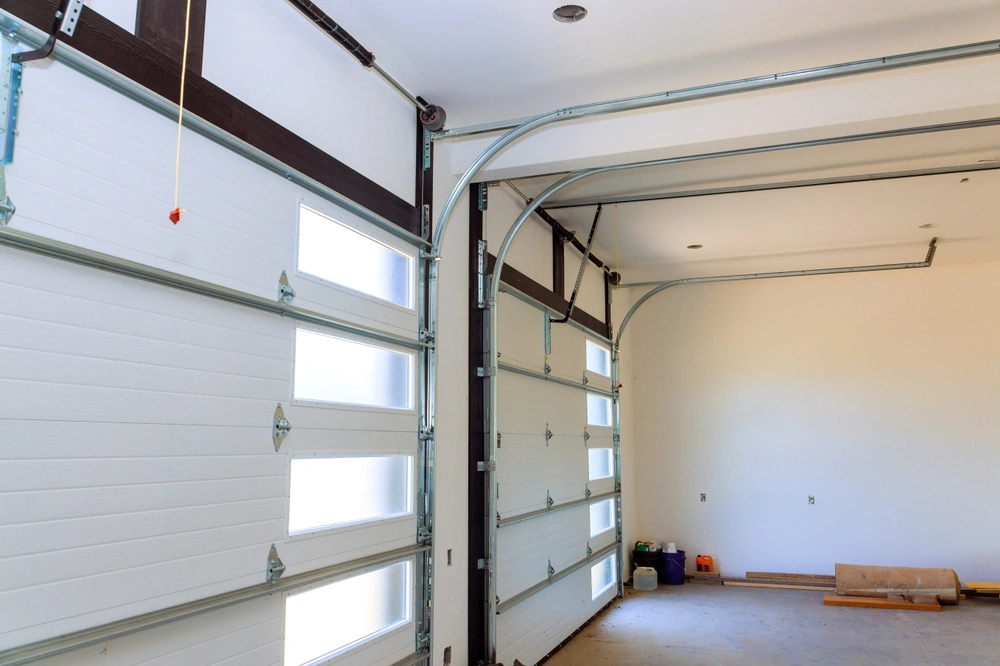
Headroom is the clear space between the top of the roller garage door opening and the lowest point of the ceiling or any obstruction, such as ductwork or a beam. Getting this measurement right is critical because it determines what type of track and opener can be installed and whether special low-clearance hardware is required.
As a rule of thumb, standard doors need more headroom than most low-ceiling garages provide, but several smart hardware and opener options can reduce this requirement without sacrificing reliability or safety.
For a standard residential sectional overhead door with a traditional torsion spring and ceiling-mounted opener, most manufacturers require about 12 to 18 inches of headroom. This allows space for the torsion tube, spring system, top fixtures and opener rail.
When ceiling height is limited, there are alternative setups with lower headroom needs:
These ranges can vary by manufacturer and door size. It is important to confirm the exact requirement for the specific door model, track style and opener being considered before finalising the setup.
The choice of opener is just as important as the track system. A traditional trolley opener with a rail running along the ceiling usually needs at least 6 to 7 inches of headroom for the rail, plus additional space for the operator itself. In very low garages, this is often not feasible.
Jackshaft or wall-mounted openers are ideal for low-headroom installations because they mount beside the door on the wall rather than above it. They drive the torsion tube directly, removing the need for a long rail along the ceiling and often working well when only 5 to 7 inches of space is available above the opening, provided there is adequate side room.
Some compact ceiling-mounted openers are designed with slimmer rails and low-profile heads that can save a couple of inches. Choosing the opener style to suit the exact ceiling conditions can help avoid clearance conflicts with vehicles or storage.
In some older or converted garages, there may be fewer than 5 inches between the top of the opening and the ceiling. In these cases, workable solutions usually require a combination of:
There are practical limits. If there is virtually no space above the opening, a standard overhead sectional door may not be possible and an alternative style may be the better option.
Homeowners with low-ceiling garages often assume they must accept limited door choices or awkward operation. In reality, there are several door and hardware combinations that work very well in tight headroom, as long as the door type and track system are chosen correctly.
The best option depends on how much headroom is available above the opening, the depth of the garage and whether there are obstructions. Below are some of the most practical garage door solutions for low-ceiling conditions.
In most low-ceiling garages, a sectional overhead door with a low-headroom track kit is the simplest and most cost-effective solution. These doors use several horizontal sections that curve along tracks and rest close to the ceiling when open. With specialised low-headroom hardware, the tracks are designed to fit with as little as 4 to 6 inches of space above the opening.
A dual-track or front-mount torsion system helps the door operate smoothly without binding, even with limited clearance. This setup is often well suited to attached garages where the homeowner wants a typical overhead look but does not have the standard 12 inches or more of headroom. Modern low-headroom kits can also be paired with insulated or non-insulated steel doors, windows and decorative hardware, so design options remain flexible.
In many low-ceiling garages, the door itself can fit, but a traditional trolley-style opener cannot. A jackshaft opener is mounted on the wall beside the door instead of hanging from the ceiling, which helps clear ceiling obstacles and keeps the centre of the garage open for storage or lighting.
When combined with a low-headroom track, a jackshaft system is one of the cleanest setups for tight spaces. It eliminates the need for a rail along the ceiling and allows the door to travel higher near the header. This type of setup can work especially well in garages with beams or in finished spaces where a less cluttered look is preferred above.
In some garages, headroom is limited near the opening, but more wall height is available farther back. In these situations, a custom high-lift or modified vertical-lift track can be used so the door travels higher up the wall before turning inward. This keeps the open door above vehicles or lifts even when the ceiling is not very tall near the front.
These configurations are more specialised and require careful measurement of wall height, backroom and any overhead obstructions. They are often paired with jackshaft openers because of the unusual track path. Careful assessment is needed to determine whether a custom lift arrangement will operate safely and provide enough clearance for the intended use of the garage.
In low-ceiling garages, the type of opener and track layout matters as much as the door itself. A standard rail-and-operator setup often needs 12 inches or more of headroom, which many homes simply do not have. Choosing the right hardware allows the door to travel smoothly within tight clearances without constant scraping or unreliable operation.
The goal is to maintain the full opening height and dependable performance while keeping motor tracks and hardware as close as possible to the structure. Assessing ceiling height, side room and nearby obstructions together makes it easier to choose a combination that fits the space properly and operates smoothly.
For very low ceilings, a jackshaft or wall-mount opener is usually the best solution. Instead of hanging from the ceiling with a long rail, this style mounts on the wall beside the door and turns the torsion shaft directly.
By moving the motor off the ceiling, a jackshaft unit can work with as little as 8 to 10 inches of headroom in many situations. This frees up the space above the door for storage or lighting and avoids conflicts with beams or ductwork. Jackshaft openers also tend to run very quietly, which is useful when there is living space above the garage.
These systems do require a torsion spring setup and a properly reinforced shaft. It is important to check whether the existing hardware is suitable or whether upgrades are needed so the motor can lift the door smoothly without twisting or binding. In homes with unusually narrow side rooms, compact drums and low-profile brackets can sometimes make wall-mount systems possible.
Track layout determines how close the door can travel to the ceiling. A standard lift track typically needs taller headroom because the top section must roll well back before it levels out. Low-headroom track changes that travel path so the door can operate in tighter spaces.
There are two common low-clearance options. A front-mount low-headroom track uses a second horizontal track for the top section, so the door starts to level almost immediately after it leaves the opening. Dual-track or rear-mount low-headroom systems reconfigure the rollers and brackets to tuck the door much closer to the ceiling through the whole cycle.
Accurate measurement of the opening height, headroom and any obstructions is essential when selecting the right track radius and style. In some tight garages, a combination of a low-headroom track and a wall-mount opener is what makes an overhead door possible at all.
Beyond the main opener and tracks, certain hardware choices can help gain a few more critical inches. Side-mount spring setups can move bulky centre springs away from conflicts such as steel beams. Low-profile spring pads and drums keep hardware closer to the header so the door can sit higher in the open position.
Smaller hardware details can also play an important role in low-clearance installations. Slimmer photo-eye brackets, short operator brackets and tight-radius elbows for safety and control wiring can help the door operate smoothly within a tighter space without compromising safety or reliability.
Before installing a roller garage door in a low-ceiling space, it is important to understand how much room is available and how that affects the type of system that will work. Looking beyond the door style itself helps ensure the track design, opener and hardware all fit safely and operate smoothly in tight overhead clearances.
The right choice depends on a mix of structural measurements, daily use and budget. Taking time to assess these factors upfront helps prevent problems such as the door hitting obstructions, rubbing the ceiling or the opener hanging too low over vehicles.
Low ceilings often come with other obstacles that affect door and opener placement. Common issues include:
Noise and vibration can also matter in low-ceiling garages that sit under living spaces. In those situations, belt-drive openers and properly sized torsion springs can help the system run more quietly.
Not every door or opener works with every low-headroom setup. The weight and height of the door must match the spring system and track configuration. Heavier insulated steel or timber doors may require upgraded low-headroom torsion hardware rather than simple extension springs to maintain safe, balanced operation.
Opener selection is just as important. Ceiling-mounted openers need enough vertical clearance for the motor unit and rail. Where that is not available, side-mounted openers that attach to the torsion shaft at the side of the door can help keep the ceiling clearer. Verifying that the opener is compatible with the chosen track layout and spring system helps avoid binding, rough operation or premature wear.
Choosing the best garage door system for a low ceiling comes down to understanding space limitations, headroom requirements and how the garage needs to function day to day. Door style, track configuration, opener type and hardware selection all affect how smoothly the system will operate and how much usable space can be preserved. The main takeaway is that a low ceiling does not rule out a safe, quiet and attractive garage door, but it does require more careful planning and the right combination of components. With accurate measurements and the right setup, it is possible to create a solution that works properly in a restricted space without compromising on convenience, safety or performance.

